
Regenerative Aesthetics |
Principles, Therapies and Treatment Strategies
Explore Key Regenerative Approaches
01 PRP
Growth factors and autologous
tissue stimulation
02 Exosomes
Cellular communication and signalling
modulation
03 Polynucleotides
ECM support and tissue repair
04 Further approaches
Expanding regenerative strategies
A Shift in Aesthetic Thinking
Regenerative aesthetics is not defined by individual treatments, but by how biological processes are understood and applied in a structured way.
Rather than focusing on isolated interventions, this approach considers tissue condition, cellular activity, and the interaction between therapeutic modalities.
This article introduces a structured framework for understanding regenerative aesthetics — from biological foundations to clinical application.
Regenerative Aesthetics — Definition
Regenerative aesthetics refers to therapeutic approaches that aim to restore tissue structure and function by activating intrinsic biological repair mechanisms, rather than providing temporary structural correction.
Unlike conventional aesthetic treatments, which focus primarily on visible outcomes, regenerative strategies target the biological processes that determine long-term skin quality.
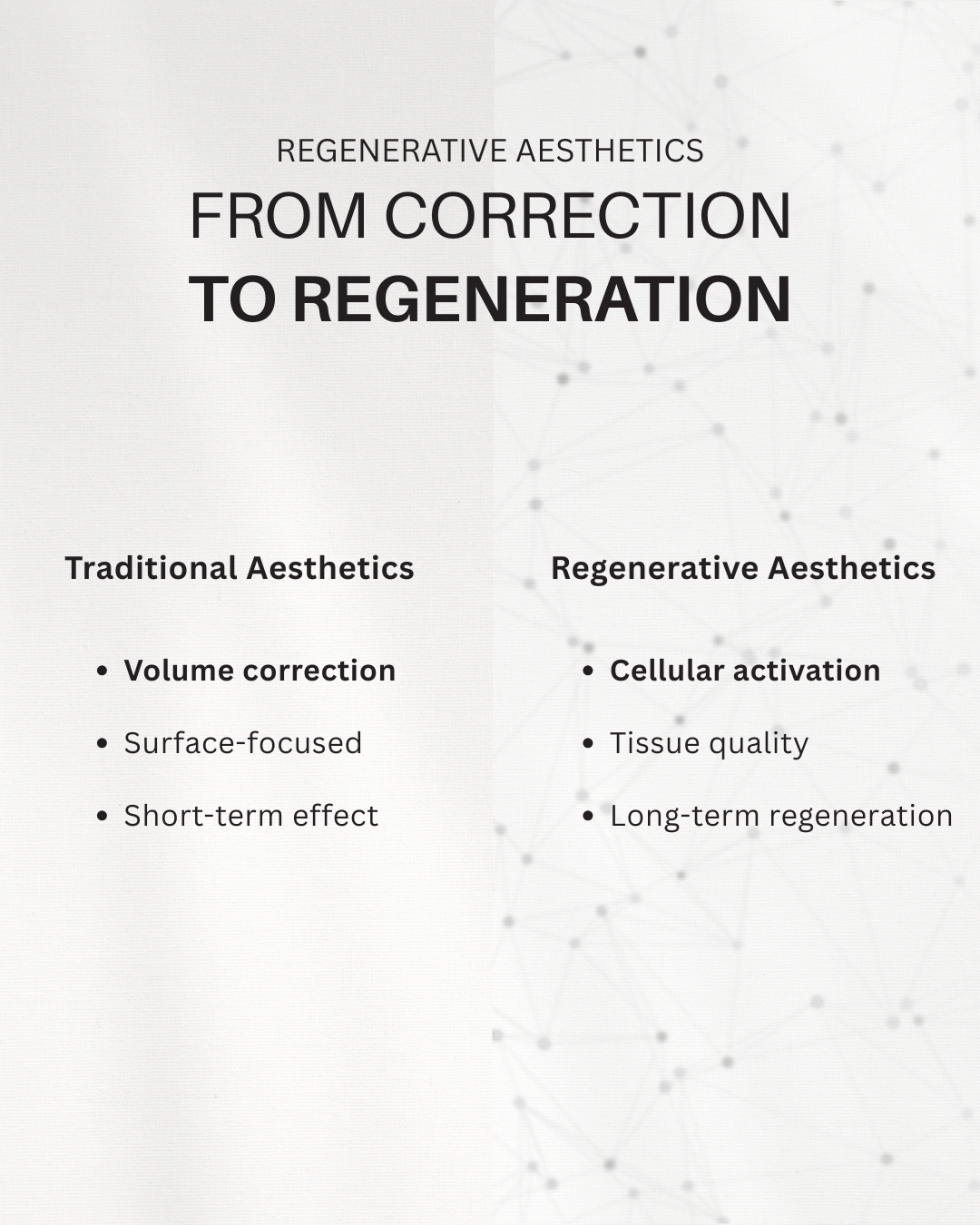
Regenerative vs Conventional Aesthetic Approaches
Conventional aesthetic treatments primarily address visible signs through structural correction, often delivering immediate but temporary results.
Regenerative approaches, in contrast, aim to restore biological function by influencing cellular activity, extracellular matrix integrity, and intercellular signaling.
Rather than isolated interventions, regenerative aesthetics relies on structured treatment strategies, sequencing, and interaction between modalities.
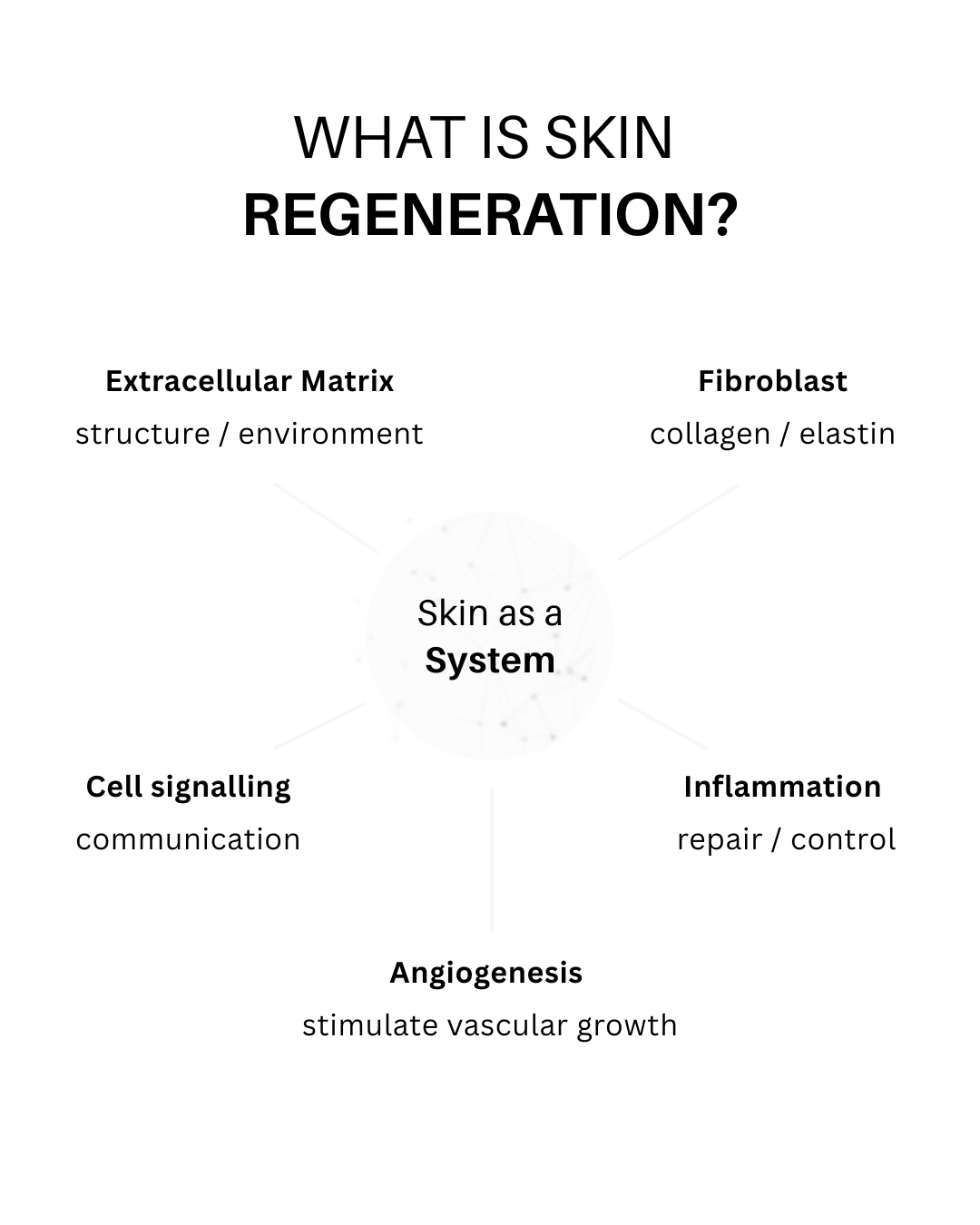
What Does “Regeneration” Actually Mean?
In aesthetic medicine, regeneration does not refer to simply “improving” the skin — it describes the targeted modulation of underlying biological processes, rather than structural substitution.
At its core, regeneration operates on multiple interconnected biological levels:
This includes:
- activation of fibroblasts responsible for collagen and elastin production
- remodelling of the extracellular matrix (ECM) to restore structural integrity
- regulation of inflammatory pathways to support controlled tissue repair
- promotion of angiogenesis to improve vascularization and nutrient supply
- optimization of intercellular communication and signalling
Rather than “adding” isolated components to the skin, regenerative approaches aim to restore the skin’s ability to function as a dynamic, self-regulating system.
The Regenerative Framework
Effective regenerative treatments are not defined by individual procedures, but by how biological processes are understood and applied within a structured system.
A regenerative approach can be divided into three interconnected layers:
1. Biological Foundation
Cellular activity, extracellular matrix integrity, and intercellular communication determine the skin’s regenerative capacity.
2. Therapeutic Modalities
Treatments such as PRP, exosomes, and biostimulatory agents influence these biological systems at different levels.
3. Clinical Application
Treatment outcomes depend on proper sequencing, combination, and adaptation to individual skin conditions.
The Biological Foundation of Skin Quality
Understanding regeneration requires moving beyond simplified terms like “collagen stimulation” toward a systems-based view of skin biology.
These core biological systems interact continuously — and together determine the quality and regenerative potential of the skin.
Fibroblasts – The Functional Core (+)
Fibroblasts are responsible for producing collagen, elastin, and structural proteins.
Their activity determines not only skin firmness, but also the skin’s capacity to respond to injury, adapt, and regenerate over time.
Extracellular Matrix (ECM) – The Structural Environment (+)
The ECM is not a passive scaffold — it is a dynamic environment that regulates cell behavior, hydration, and mechanical stability.
A degraded ECM cannot support effective regeneration, regardless of the treatment applied.
Cellular Communication – The Control System (+)
Skin function is coordinated through signaling molecules such as growth factors, cytokines, and extracellular vesicles (e.g., exosomes).
These signals determine how cells respond to stress, injury, and therapeutic interventions — effectively orchestrating the regenerative process.
Inflammation & Healing – The Balance (+)
Regeneration depends on controlled inflammation as a necessary part of tissue repair.
However, chronic low-grade inflammation leads to progressive tissue degradation and impaired regenerative capacity.
From Correction to Strategy
In clinical practice, outcomes rarely fail due to a lack of available treatments — but because they are applied without a structured biological framework.
As a result, even advanced technologies are often used in ways that limit their effectiveness and fail to produce consistent, long-term results.
Common issues include:
- treatments initiated without adequate tissue assessment
- regenerative methods applied in isolation, without strategic integration
- combinations used without understanding biological interaction effects
- absence of clearly defined treatment sequencing
This often leads to:
- inconsistent and unpredictable outcomes
- reduced durability of results
- unmet patient expectations
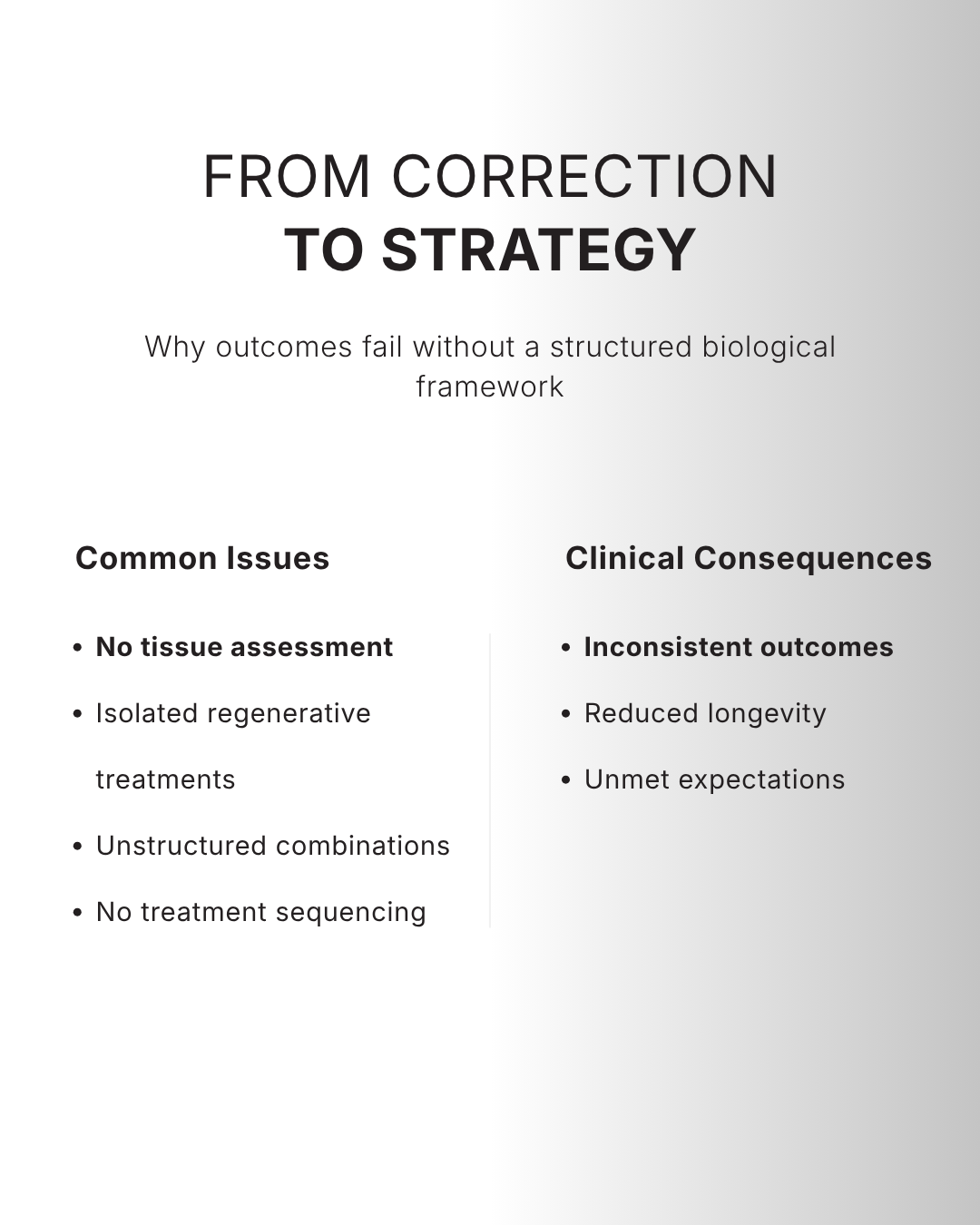
The limitation, therefore, is not the treatment itself — but the absence of a coherent, biology-driven strategy.
This is precisely where a structured regenerative approach becomes essential.
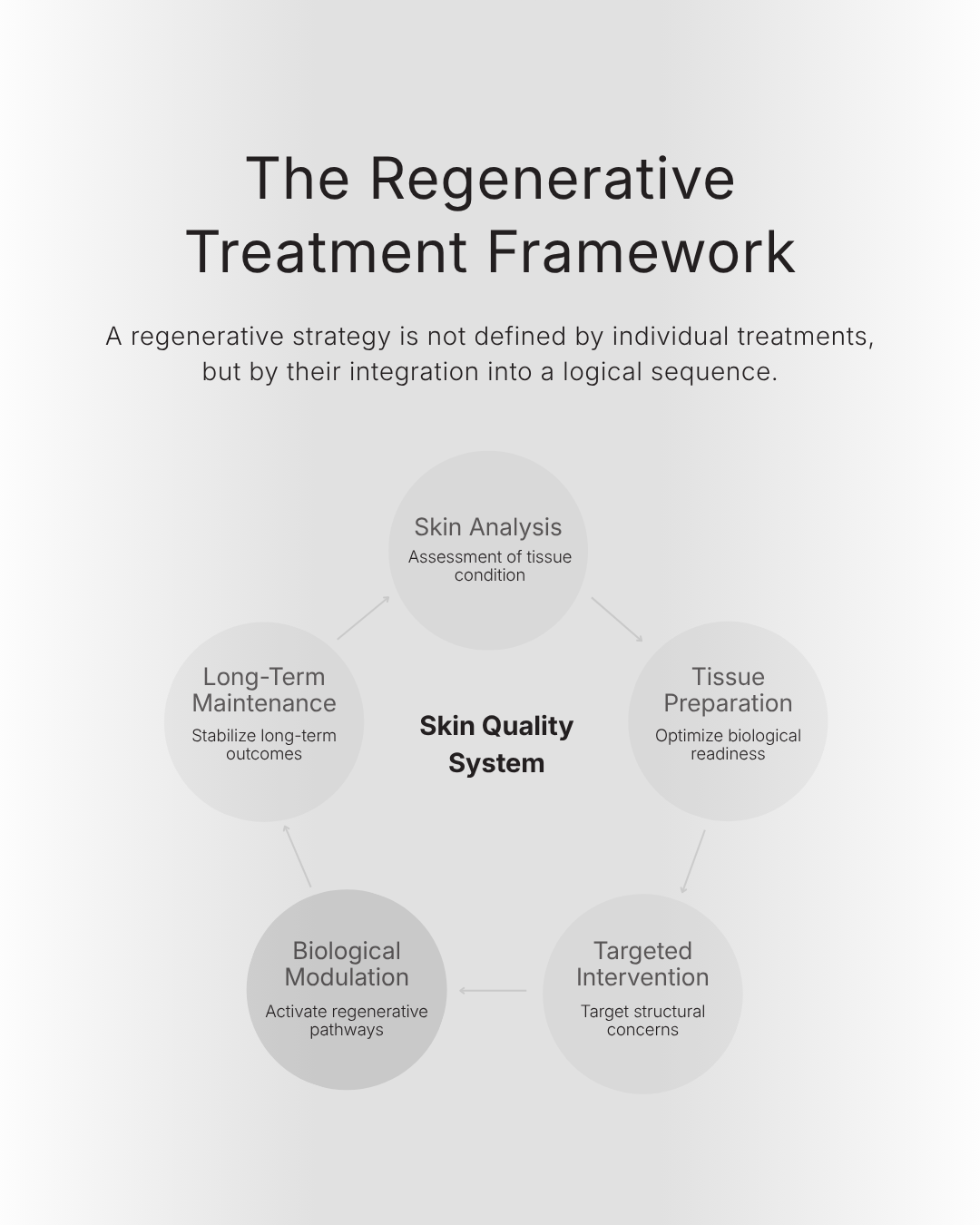
The MW Dermal Regeneration System
A regenerative strategy is not defined by individual treatments, but by how they are integrated into a structured, biologically coherent sequence.
In clinical practice, suboptimal outcomes rarely result from a lack of available technologies — but from how these technologies are selected, combined, and applied.
Without a clearly defined framework, even advanced procedures remain isolated interventions, unable to fully leverage the skin’s intrinsic regenerative capacity.
A structured regenerative approach shifts the focus from what is used to when, why, and in what sequence it is applied. It aligns each intervention with the biological state of the tissue, ensuring that every step builds upon the previous one — rather than disrupting or counteracting it.
Regeneration, therefore, is not a single treatment, but a coordinated biological process.
One that requires systematic assessment, targeted preparation, precise intervention, and continuous modulation to achieve stable, long-term improvements in skin quality.
01 Skin Analysis
Before any intervention, a structured clinical assessment is essential to accurately understand the current biological state of the tissue and define an appropriate, evidence-based treatment strategy.
This includes:
- evaluation of skin quality (thickness, elasticity, hydration)
- assessment of inflammatory status
- analysis of barrier integrity and function
- evaluation of vascularization and tissue perfusion
- consideration of patient history, lifestyle factors, and external influences
This step forms the foundation of any regenerative protocol, ensuring that all subsequent interventions are precisely aligned with the actual biological needs of the skin — rather than based on assumptions or standardized treatment patterns.
02 Tissue Preparation
Optimizing tissue conditions prior to intervention requires a structured, biology-driven approach to enhance the skin’s regenerative readiness.
This includes:
- restoring hydration and strengthening barrier integrity
- reducing underlying inflammatory activity
- enhancing cellular responsiveness and signalling capacity
- improving microcirculation and nutrient delivery
These adjustments create a biologically favorable environment for subsequent interventions, directly influencing treatment efficiency, predictability, and overall outcome quality.
Without adequate preparation, even well-executed procedures may result in limited, short-lived, or inconsistent outcomes.
03 Targeted Intervention
Targeted intervention focuses on selecting the most appropriate procedure based on clinical indication, tissue condition, and clearly defined treatment objectives.
This may include:
- microneedling to induce controlled tissue remodelling and collagen stimulation
- laser-based therapies to address structural irregularities and pigment-related concerns
- injectable treatments to restore volume, improve hydration, or modulate biological activity
The effectiveness of this phase depends not only on the chosen modality, but on its integration within the overall regenerative strategy and alignment with the preceding preparation phase.
When interventions are applied without this structured context, results often remain superficial, less predictable, and lack long-term stability.
04 Biological Modulation
Following intervention, the focus shifts to actively supporting and modulating the skin’s biological response to enhance regeneration, improve tissue integration, and optimize overall skin quality.
This may include:
- platelet-rich plasma (PRP) to stimulate endogenous growth factor activity
- exosomes to support intercellular communication and signalling pathways
- polynucleotides to enhance tissue repair, hydration, and cellular regeneration
- peptides to regulate key regenerative and inflammatory pathways
This phase is critical in determining how effectively the skin responds to intervention and how well results are integrated, stabilized, and expressed over time.
Without targeted biological modulation, the regenerative potential of preceding treatments remains only partially utilized — resulting in outcomes that lack depth, consistency, and long-term durability.
05 Long-Term Maintenance
Long-term maintenance focuses on stabilizing results, preserving tissue quality, and supporting continuous regeneration over time.
This includes:
- consistent use of targeted, biology-driven skincare
- periodic stimulation cycles where clinically indicated
- protection against environmental stressors, particularly UV exposure
- adaptation of lifestyle factors influencing skin health
This phase ensures that improvements achieved through treatment are not only maintained, but progressively enhanced through sustained biological support.
Without a structured maintenance strategy, results decline over time — reducing durability and increasing the need for repeated corrective interventions.
Regenerative Therapies by Biological Target
Regenerative therapies do not act uniformly — they influence distinct biological layers within the skin system.
Understanding these target layers enables more precise, structured, and predictable treatment strategies.
Each approach is defined not only by what it is, but by which biological function it primarily modulates — while often acting across multiple layers simultaneously.
Cellular Communication (Signaling)
CONTROL LAYER
Coordinates how cells communicate, respond, and adapt to internal and external stimuli.
- Exosomes
→ modulation of intercellular communication and signalling dynamics - Peptides
→ targeted regulation of signalling pathways and cellular response
Extracellular Matrix (ECM)
STRUCTURAL ENVIRONMENT
Defines the structural and biochemical environment that supports cellular function and tissue integrity.
- Polynucleotides
→ support for ECM structure, hydration, and tissue repair - Biostimulators (CaHA, PLLA)
→ indirect collagen stimulation through controlled tissue response
Cellular Regeneration & Repair
ACTIVATION LAYER
Drives the activation of repair processes and regeneration at the cellular level.
- PRP
→ delivery of autologous growth factors to support tissue repair and regeneration - Stem cell-derived therapies
→ high regenerative potential, currently under clinical evaluation
Inflammation & Barrier Regulation
REGULATION LAyER
Controls the inflammatory environment and maintains barrier stability essential for effective regeneration.
- PRP
→ modulation of inflammatory signalling and support of controlled tissue repair - Microbiome approaches
→ support for barrier stability and inflammatory balance
Structural / Energy-Based Stimulation
TRIGGER MECHANISM
Initiates regenerative processes by activating the skin’s intrinsic repair mechanisms through controlled stimuli.
-
Laser / RF / Ultrasound
→ activation of biological repair mechanisms via controlled energy delivery
Clinical Reality vs. Market Perception
Despite its strong scientific foundation, regenerative aesthetics is frequently reduced to simplified and often misleading marketing narratives.
Terms such as:
- “collagen boosting”
- “peptide-rich formulations”
- “regenerative serums”
are widely used without sufficient:
- quantitative transparency
- mechanistic clarity
- clinical validation and context
This creates a growing disconnect between actual biological processes and how treatments and products are communicated.
In clinical practice, this disconnect translates into:
- unrealistic expectations regarding outcomes
- inconsistent or poorly structured treatment strategies
- confusion among both patients and practitioners
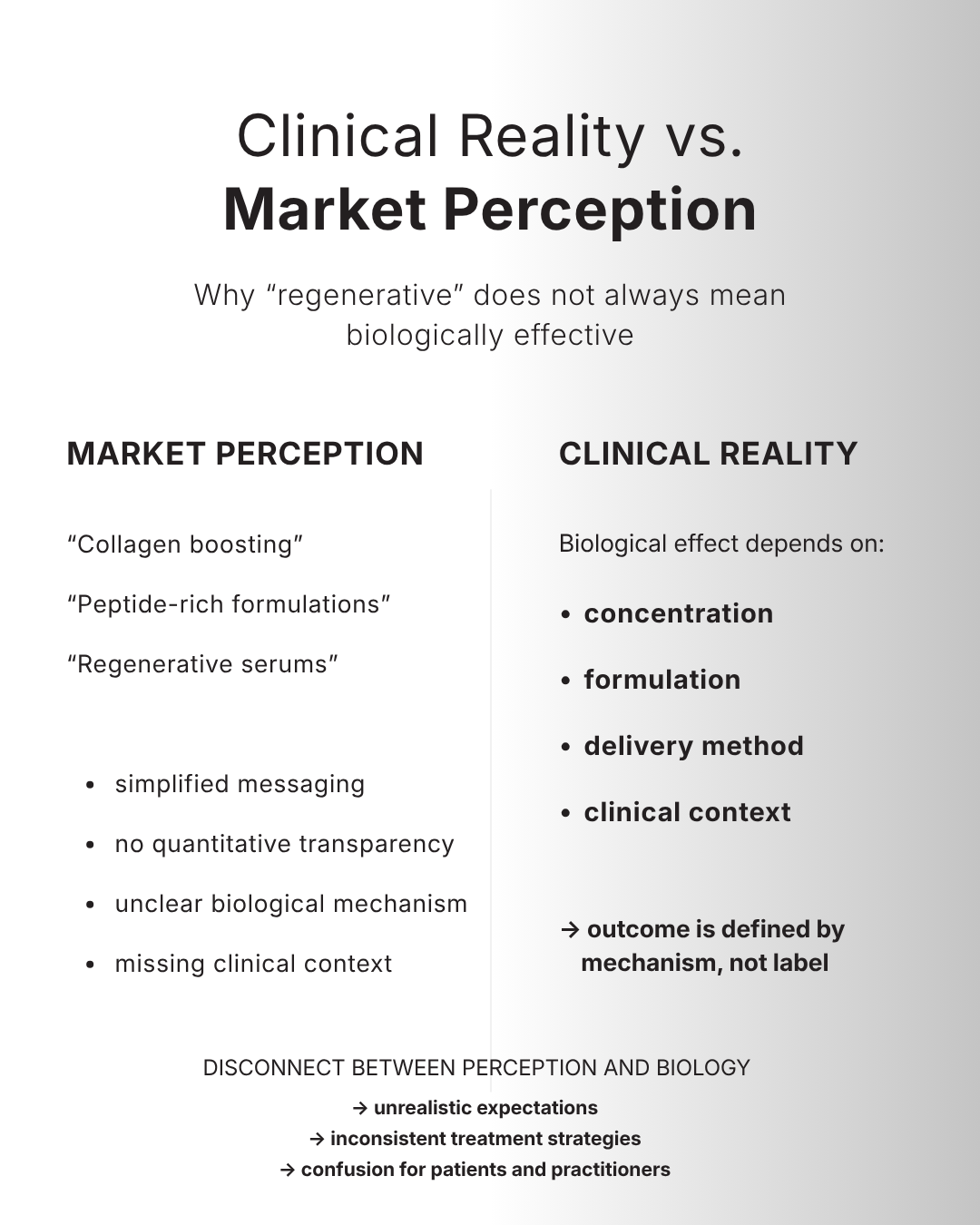
A product labelled as “regenerative” does not inherently produce a meaningful biological effect.
Its clinical impact is determined by:
- concentration and bioavailability of active compounds
- formulation and stability
- delivery method and depth of penetration
- integration within a structured treatment protocol
- alignment with the current biological state of the tissue
Without these factors, even well-formulated products fail to deliver consistent or clinically relevant results.
Regenerative aesthetics, therefore, should not be defined by terminology — but by measurable biological outcomes and protocol-driven application.
Why Understanding Matters
Regenerative aesthetics requires a fundamental shift — from product-driven thinking to system-based decision making.
Without this shift, even advanced treatments risk being applied without clear purpose, biological alignment, or measurable outcome.
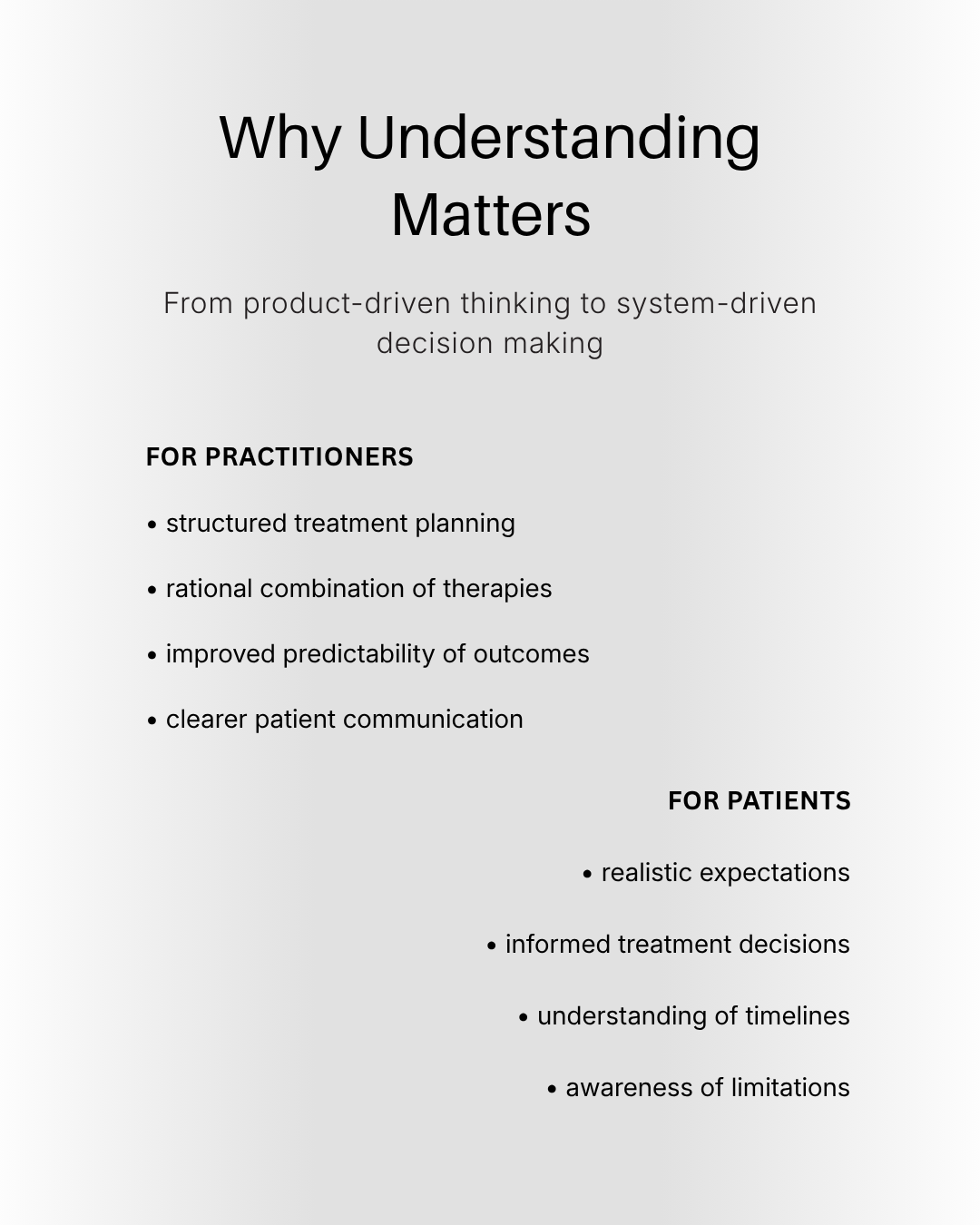
For Practitioners
A deeper understanding enables:
- structured, biology-driven treatment planning
- rational and synergistic combination of therapies
- predictable, reproducible clinical outcomes
- clear, confident patient communication
For Patients
It allows:
- realistic expectations based on biological processes
- informed and confident treatment decisions
- understanding of timelines, limitations, and progression
- greater trust in structured, long-term strategies
Without this understanding, even advanced treatments risk being applied without clear purpose or measurable outcome.
The Future of Aesthetic Medicine
Aesthetic medicine is evolving toward a more integrated, biologically informed, and strategy-driven model — where isolated treatments are replaced by structured, outcome-oriented systems.
Rather than focusing on short-term correction, the field is increasingly defined by long-term tissue quality, regenerative capacity, and individualized treatment pathways.
Key developments include:
Protocol-Based Treatment Systems
Structured, sequential treatment approaches replacing isolated interventions
→ enabling predictable, cumulative, and biologically aligned outcomes
Combination Therapies
Synergistic integration of multiple modalities
→ not additive, but strategically layered based on tissue condition and treatment phase
Personalized Regeneration
Adaptation of treatments to individual biological variability
→ moving beyond standardized protocols toward patient-specific regenerative strategies
Data-Driven Aesthetics (Emerging)
Integration of imaging technologies, biomarkers, and AI-supported analysis
→ enabling more precise diagnosis, treatment planning, and outcome evaluation
Long-Term Tissue Management
Shift from episodic correction to continuous optimization of skin quality
→ focusing on stability, maintenance, and progressive improvement over time
These developments are not isolated trends — they represent a coherent shift toward a unified, regenerative treatment philosophy.
Together, they redefine aesthetic medicine — moving from procedure-based thinking to system-based regeneration.
Clinics that adopt this approach move beyond treating visible symptoms and toward actively managing the biological processes that define skin quality over time.
Where This Series Continues
Together, these principles form the foundation of the MW Dermal Regeneration System — a structured approach to achieving consistent, long-term improvements in skin quality.
The following articles build upon this framework, exploring key regenerative modalities in greater depth — with a focus on their biological mechanisms, clinical application, and role within a coordinated treatment strategy.
- Part 1 → PRP (Platelet-Rich Plasma)
- Part 2 → Exosomes
- Part 3 → Polynucleotides
- → Further regenerative strategies to follow
Together, these articles form a comprehensive, protocol-driven perspective on regenerative aesthetics — moving beyond isolated treatments toward a more integrated understanding of skin biology and long-term tissue optimization.
Rather than viewing each modality in isolation, the focus shifts to understanding how they interact, complement, and build upon one another within a structured regenerative system.
Fibroblasts
Primary dermal cells producing collagen, elastin, and essential structural components of the skin.
They drive tissue repair, regeneration, and overall skin quality.
→ More about fibroblasts
Extracellular Matrix (ECM)
The extracellular matrix (ECM) is a dynamic structural network that provides mechanical support and regulates cellular behavior.
It influences hydration, elasticity, and how cells respond to mechanical and biochemical signals.
→ More about extracellular matrix (ecm)
Cellular Communication
Cellular communication refers to the signaling processes that coordinate cell behavior through growth factors, cytokines, and extracellular vesicles.
These signals determine how cells respond to stress, injury, and therapeutic interventions.
→ More about cellular communication
Inflammation & Healing
Inflammation is a controlled biological response required for tissue repair and regeneration.
Balanced inflammation supports healing, while chronic inflammation leads to tissue degradation and impaired regenerative capacity.
→ More about inflammation & healing
INFLAMMATION & HEALING
Inflammation is a controlled biological response that initiates tissue repair and regeneration.
In its acute form, it activates immune pathways, removes damaged tissue, and triggers regenerative processes.
However, when inflammation becomes chronic or dysregulated, it leads to continuous tissue degradation, extracellular matrix breakdown, and impaired cellular function.
This imbalance reduces the skin’s ability to regenerate and respond effectively to treatment.
Successful regenerative strategies therefore depend on supporting controlled inflammation while preventing persistent low-grade inflammatory activity.
→ View Glossary Entry
CELLULAR COMMUNICATION
Cellular communication is the regulatory system that coordinates how cells respond to internal and external signals.
This communication occurs through signalling molecules such as growth factors, cytokines, and extracellular vesicles, including exosomes.
These signals control key processes such as inflammation, tissue repair, and regeneration. The timing, intensity, and balance of these signals determine how effectively cells respond to therapeutic interventions.
Disruptions in cellular communication — due to ageing, inflammation, or environmental stress — lead to uncoordinated responses and reduced regenerative efficiency.
As a result, even when structural components and functional cells are present, impaired signalling can limit meaningful regeneration.
→ View Glossary Entry
EXTRACELLULAR MATRIX (ECM)
The extracellular matrix (ECM) is a dynamic structural and biochemical network that regulates cellular behaviour and tissue function.
It is composed primarily of collagen fibres (types I and III), elastin, and glycosaminoglycans such as hyaluronic acid, which together provide mechanical stability, hydration, and structural organization.
Beyond its structural role, the ECM functions as a signalling interface, influencing fibroblast activity, cell migration, differentiation, and tissue repair.
The integrity and organization of the ECM determine how effectively cells can respond to regenerative stimuli. A well-structured matrix supports coordinated repair, while a degraded ECM reduces cellular responsiveness and disrupts signalling pathways.
→ View Glossary Entry
Fibroblasts
Fibroblasts are the primary functional cells of the dermis, responsible for synthesizing collagen (primarily types I and III), elastin, and key extracellular matrix components.
They regulate tissue structure, mechanical strength, and elasticity, and play a central role in wound healing and long-term tissue remodelling.
Fibroblast activity is influenced by signals from the extracellular matrix, growth factors, and inflammatory mediators. Their ability to respond to these signals determines the skin’s regenerative capacity.
With ageing or chronic inflammation, fibroblast function declines, leading to reduced collagen production and impaired tissue repair.
Effective regenerative strategies therefore depend not only on fibroblast stimulation, but on restoring the surrounding biological environment that enables proper cellular function.
→ View Glossary Entry