Skin Biology
The Biology of Skin Regeneration
Explore Key Topics in Skin Biology
01 Fibroblasts
Collagen synthesis and
extracellular matrix regulation
02 Extracellular Matrix
Structural framework and tissue organization
03 Cellular Signalling
Communication pathways driving regeneration
04 Further topics
Expanding biological understanding
CELLULAR BIOLOGY
REGENERATIVE CASCADE
EXTRACELLULAR MATRIX
A Biological Perspective on Skin Regeneration
Skin regeneration is often described as a natural and automatic outcome of healing.
In reality, it is a highly regulated biological process that depends on coordinated cellular activity and precise signalling.
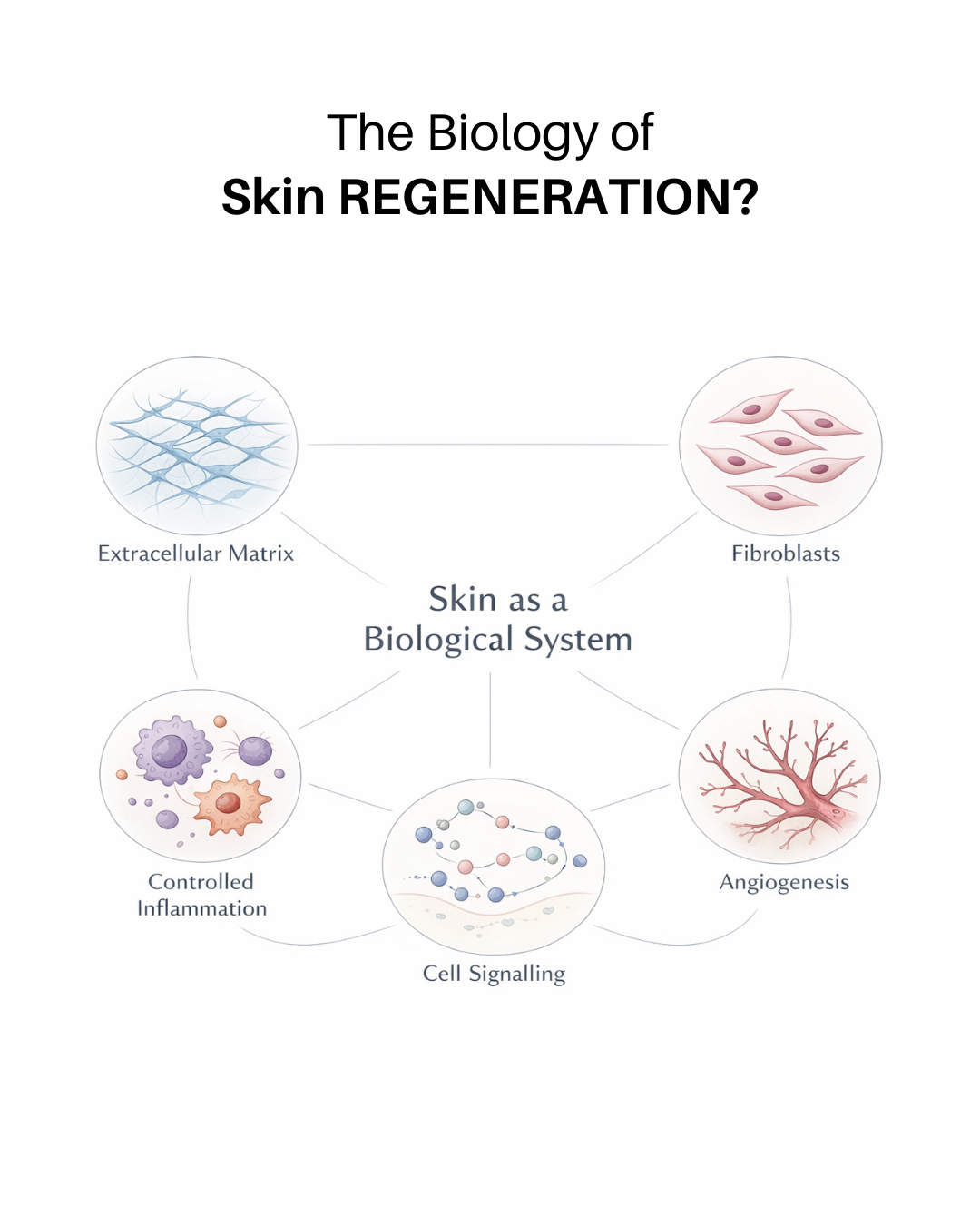
The skin does not function as a passive structure. It is a dynamic system in which multiple cell types continuously interact to maintain balance, respond to stress, and initiate repair.
When this system is disrupted, the body activates a sequence of biological responses aimed at restoring tissue integrity. However, this process does not automatically result in true regeneration.
In adult human skin, healing is most often characterized by repair rather than full restoration of native tissue.
Understanding this distinction is essential for interpreting both the potential and the limitations of regenerative approaches.
Skin as a Dynamic Biological System
The skin consists of multiple layers and specialized cell types, each contributing to its structural and functional integrity. Rather than acting independently, these components form an interconnected biological system.
Key cellular contributors include:
- keratinocytes (+)
- fibroblasts (+)
- endothelial cells (+)
- immune cells (+)
These cells do not operate in isolation. They communicate continuously, responding to environmental changes and coordinating repair processes.
Fibroblasts play a central role in maintaining and rebuilding the extracellular matrix (+), which provides structural support and regulates cellular behavior. Keratinocytes form the epidermal barrier, while endothelial cells support vascularization and nutrient supply. Immune cells regulate inflammation and initiate repair responses.
This coordinated interaction defines the skin not as a static structure, but as a dynamic biological network.
The Regenerative Cascade
Skin regeneration follows a structured sequence of biological events. These phases are distinct yet overlapping, forming a continuous process rather than a strictly linear progression.
Inflammation Phase
The regenerative process begins with inflammation. This phase is triggered by tissue disruption and functions as a signalling event rather than a purely destructive response.
Immune cells migrate to the affected area, releasing cytokines and other signalling molecules. These signals initiate the repair process and prepare the tissue for subsequent regeneration.
Although often perceived as negative, controlled inflammation is essential for activating the regenerative cascade.
Proliferation Phase
Following the initial inflammatory response, the proliferation phase begins.
Fibroblasts become activated and start producing components of the extracellular matrix (+), including collagen (+). At the same time, keratinocytes proliferate and migrate to restore the epidermal barrier.
Angiogenesis (+), the formation of new blood vessels, ensures the supply of oxygen and nutrients to the regenerating tissue.
This phase represents the active rebuilding of tissue structure.
Remodeling Phase
The final phase involves tissue remodelling.
Collagen fibres are reorganized, and the extracellular matrix undergoes structural refinement. The goal is to restore functional integrity rather than simply close the wound.
However, in adult human skin, this process often results in repair rather than true regeneration. The newly formed tissue may differ from the original in both structure and function, leading to scar formation.
Cellular Communication and Signalling
At the core of skin regeneration lies cellular communication.
Cells coordinate their activity through signalling molecules such as growth factors (+), cytokines, and extracellular vesicles (+).
These signals regulate key processes including cell migration, proliferation, and differentiation.
Regeneration is not driven by isolated substances, but by the interaction of signalling pathways within a complex biological environment.
This perspective is essential for understanding modern regenerative approaches. Treatments do not directly create regeneration; they influence the signalling environment that governs cellular behaviour.
The Extracellular Matrix as a Structural Framework
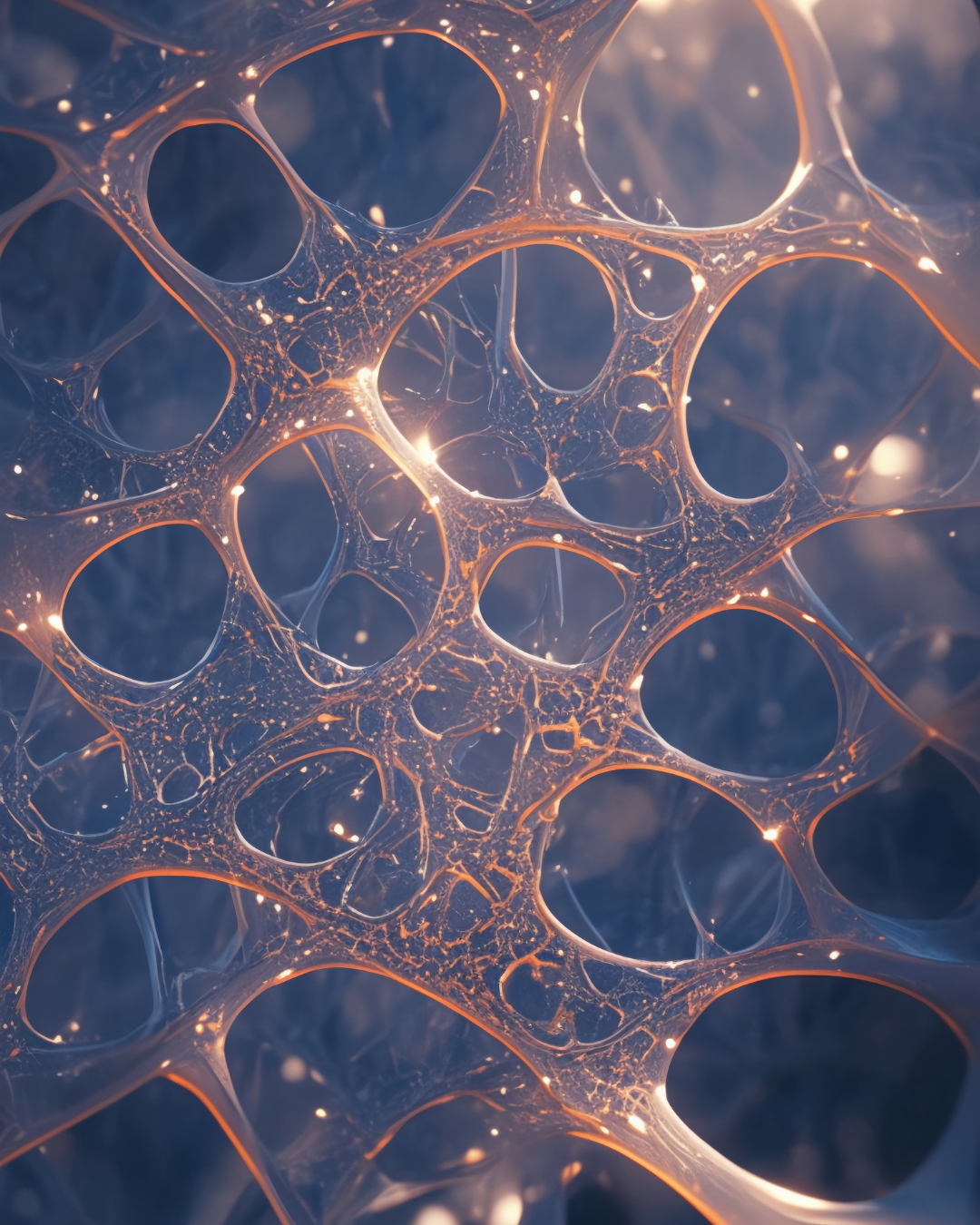
The extracellular matrix (+) is more than a structural scaffold; it is an active component of the regenerative process.
Composed of proteins such as collagen (+) and elastin (+), the ECM provides mechanical stability while shaping cellular behaviour. It regulates how cells respond to signals, migrate, and organise within tissue.
A well-structured extracellular matrix supports effective regeneration. In contrast, a disrupted or degraded matrix limits the quality and predictability of tissue repair.
ECM integrity is therefore a central determinant of regenerative outcomes.
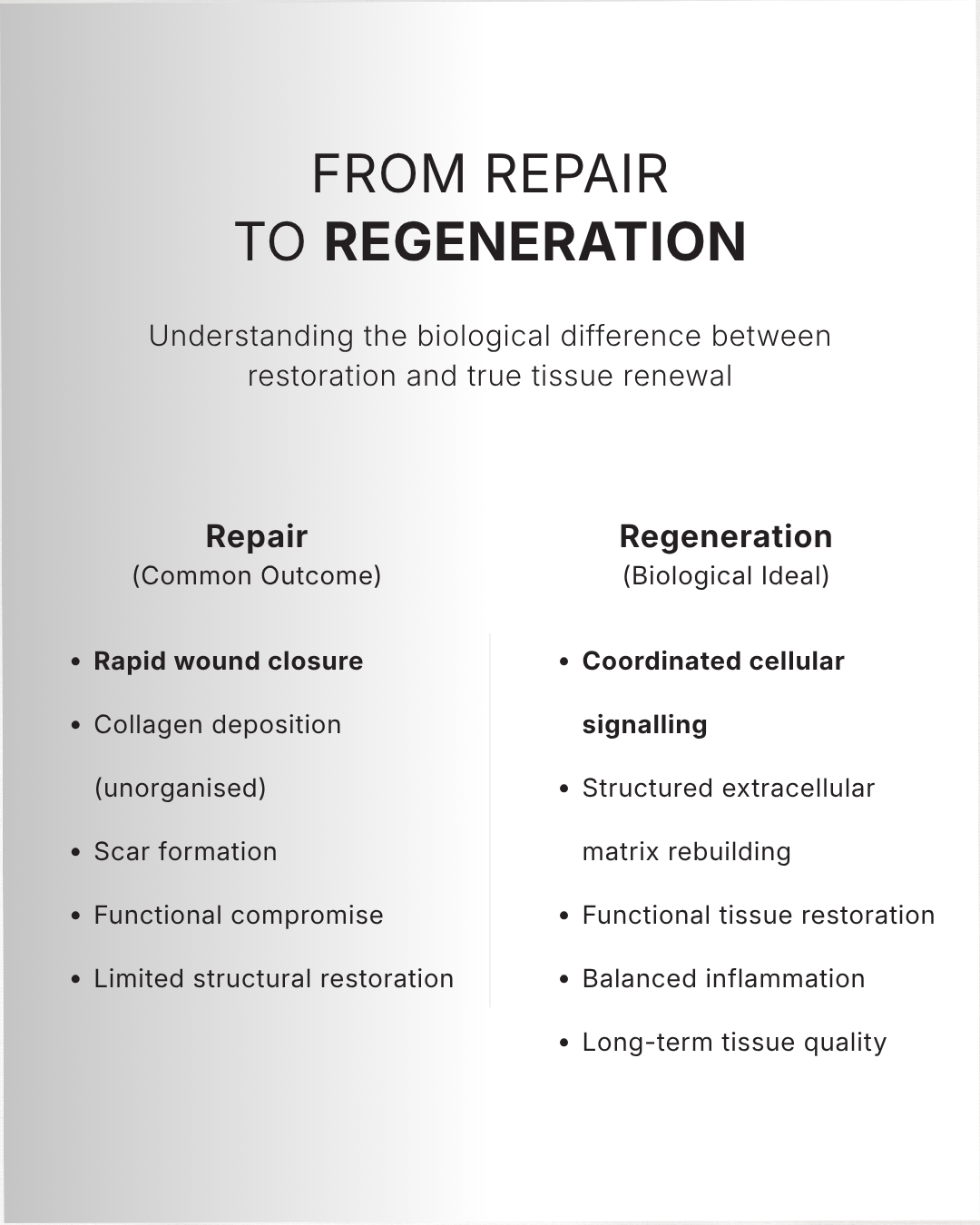
Regeneration vs. Repair
A critical distinction in skin biology lies in the difference between regeneration and repair.
Repair is a rapid response aimed at restoring tissue continuity. It often leads to scar formation and does not fully replicate the original tissue structure or function.
Regeneration, in contrast, is a controlled and coordinated process that restores both structure and function.
In adult human skin, true regeneration is limited. Most healing processes result in repair rather than complete restoration.
Understanding this limitation is essential. It explains why many treatments produce visible improvement without fully restoring tissue quality.
Factors Influencing Regeneration
Regenerative outcomes are not uniform. They depend on multiple internal and external factors.
Intrinsic factors include age, genetic predisposition, and baseline tissue condition. Over time, the regenerative capacity of the skin declines, affecting both the speed and quality of healing.
Extrinsic factors such as ultraviolet exposure (+), environmental stress, and chronic inflammation also play a significant role.
UV exposure, for example, disrupts cellular signalling, accelerates extracellular matrix degradation, and interferes with regenerative processes. This progressively reduces the skin’s ability to maintain structural integrity.
The regenerative process is therefore highly context-dependent.
Clinical Relevance
Understanding the biology of skin regeneration has direct clinical implications.
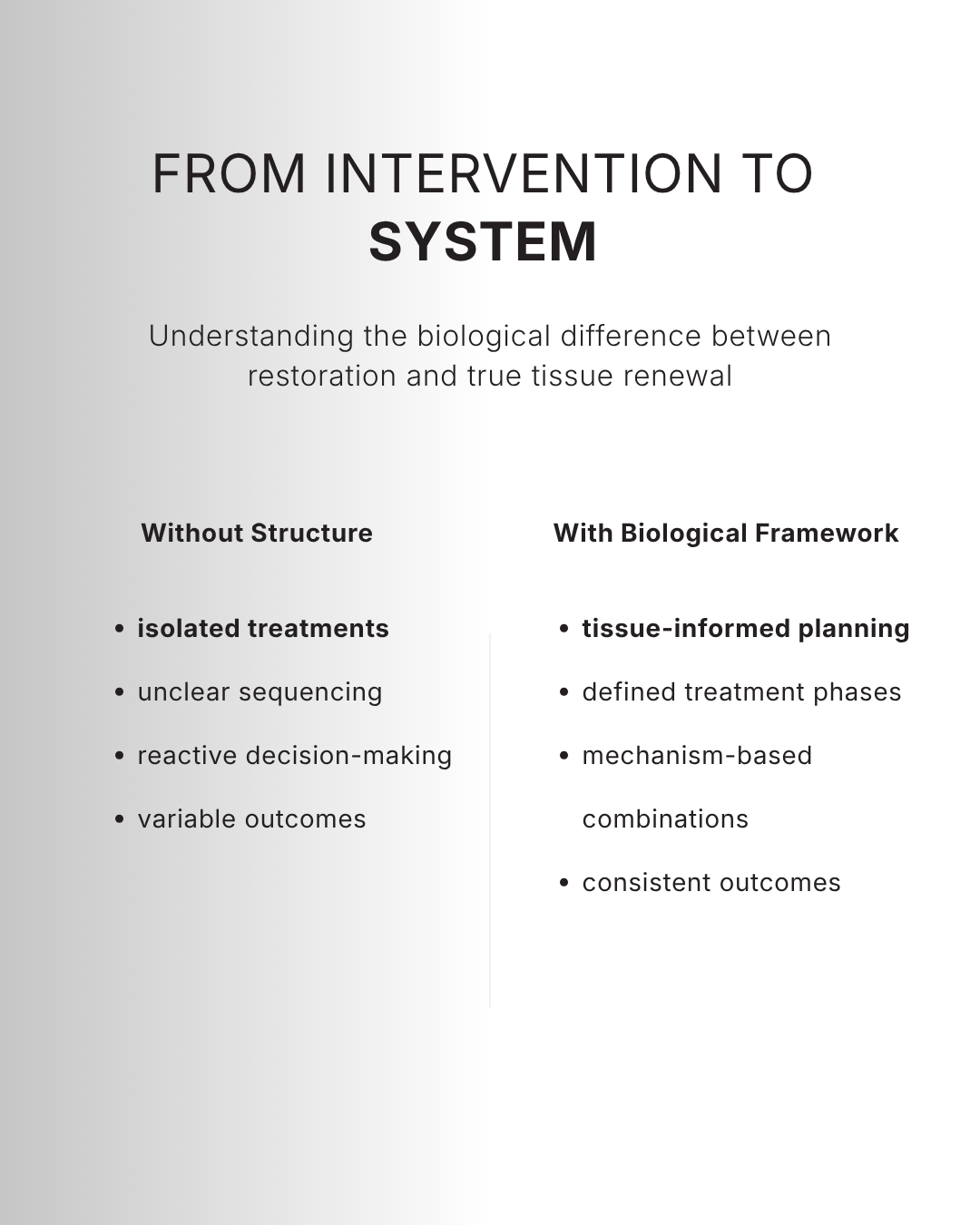
Effective treatment strategies require more than selecting individual interventions. They depend on understanding how different approaches influence the regenerative cascade.
Procedures such as microneedling, laser therapy, or the application of bioactive compounds do not create regeneration independently. Instead, they modulate biological processes that are already active within the tissue.
This perspective enables more structured treatment planning, improved predictability, and more consistent long-term outcomes.
Treatment Planning
- move from isolated interventions → structured protocols
- align treatments with biological phases
- combine modalities based on mechanism, not trend
Mechanism Awareness
- treatments modulate existing processes, they do not create regeneration
- outcomes depend on signalling environment
- timing and sequencing influence results
Outcome Predictability
- improved consistency through system-based approach
- reduced variability in results
- better long-term tissue quality
Integration into the MW Dermal Regeneration System
Within the MW Dermal Regeneration System, biological understanding is not an addition — it is the foundation.
Treatments are not applied as isolated interventions, but as targeted influences on an already active biological environment. Each step is designed to align with the underlying regenerative processes of the skin.
Regeneration does not begin with the treatment itself. It begins with the condition of the tissue, the integrity of the extracellular matrix, and the signalling environment that governs cellular behaviour.
Interventions such as microneedling, laser therapy, or bioactive compounds do not create regeneration independently. They act as modulators — amplifying, guiding, or restoring processes that are already present within the system.
This shifts the role of treatment from correction to coordination.
Outcomes become more predictable not by increasing intensity, but by improving alignment with biological mechanisms.
Regeneration, in this context, is not introduced from the outside. It emerges from the activation of intrinsic repair capacity within a structured and controlled framework.
Conclusion
Skin regeneration is a complex, coordinated process that extends beyond simple wound closure or surface-level improvement.
In adult human skin, healing is predominantly characterised by repair rather than true regeneration. Meaningful regenerative outcomes therefore depend on understanding and influencing the biological processes that govern tissue response.
By focusing on cellular communication, structural integrity, and system-based application, regenerative strategies can be applied more effectively and with greater predictability.
Understanding the biology of skin regeneration is not optional. It is the foundation upon which all regenerative approaches are built.
FAQ
Common questions about skin biology and their clinical use.
What is skin regeneration?
Skin regeneration is a coordinated biological process involving cellular communication, extracellular matrix remodelling, and tissue restructuring. It goes beyond simple repair and aims to restore both structure and function.
What is the difference between regeneration and repair?
Repair restores tissue continuity quickly, often resulting in scar formation and incomplete structural restoration. Regeneration, in contrast, is a controlled process that restores both structure and function. In adult human skin, most healing occurs as repair rather than true regeneration.
Are exosomes or active ingredients responsible for regeneration?
No. Regeneration is not driven by isolated substances. It results from the interaction of signalling pathways within a biological system. Substances such as exosomes or growth factors modulate these processes, but do not independently create regeneration.
Do treatments like microneedling or laser create regeneration?
These treatments do not create regeneration directly. They induce controlled biological responses—such as inflammation and cellular signalling—that can activate regenerative processes within the tissue.
Why do many treatments improve the skin but not fully restore it?
Because most interventions trigger repair rather than true regeneration. While visible improvements can be achieved, full restoration of tissue structure and function is limited by the skin’s intrinsic regenerative capacity.
What determines the success of regenerative treatments?
Outcomes depend on multiple factors, including tissue condition, signalling environment, extracellular matrix integrity, and treatment sequencing. Regeneration is therefore highly context-dependent.
Why is a system-based approach important in regenerative aesthetics?
Because regeneration is not a single event but a coordinated process. A system-based approach ensures that treatments are aligned with biological timing, tissue condition, and signalling pathways, leading to more predictable outcomes.
What does “modulating biological processes” mean in practice?
It means influencing existing cellular mechanisms—such as signalling, inflammation, and matrix remodelling—rather than introducing regeneration from the outside. Treatments act as regulators, not creators.
Why is understanding skin biology essential for treatment planning?
Without a biological framework, treatments are often applied in isolation, leading to inconsistent results. Understanding the underlying processes allows for structured protocols, better combination strategies, and improved long-term outcomes.
INFLAMMATION & HEALING
Inflammation is a controlled biological response that initiates tissue repair and regeneration.
In its acute form, it activates immune pathways, removes damaged tissue, and triggers regenerative processes.
However, when inflammation becomes chronic or dysregulated, it leads to continuous tissue degradation, extracellular matrix breakdown, and impaired cellular function.
This imbalance reduces the skin’s ability to regenerate and respond effectively to treatment.
Successful regenerative strategies therefore depend on supporting controlled inflammation while preventing persistent low-grade inflammatory activity.
→ View Glossary Entry
CELLULAR COMMUNICATION
Cellular communication is the regulatory system that coordinates how cells respond to internal and external signals.
This communication occurs through signalling molecules such as growth factors, cytokines, and extracellular vesicles, including exosomes.
These signals control key processes such as inflammation, tissue repair, and regeneration. The timing, intensity, and balance of these signals determine how effectively cells respond to therapeutic interventions.
Disruptions in cellular communication — due to ageing, inflammation, or environmental stress — lead to uncoordinated responses and reduced regenerative efficiency.
As a result, even when structural components and functional cells are present, impaired signalling can limit meaningful regeneration.
→ View Glossary Entry
EXTRACELLULAR MATRIX (ECM)
The extracellular matrix (ECM) is a dynamic structural and biochemical network that regulates cellular behaviour and tissue function.
It is composed primarily of collagen fibres (types I and III), elastin, and glycosaminoglycans such as hyaluronic acid, which together provide mechanical stability, hydration, and structural organization.
Beyond its structural role, the ECM functions as a signalling interface, influencing fibroblast activity, cell migration, differentiation, and tissue repair.
The integrity and organization of the ECM determine how effectively cells can respond to regenerative stimuli. A well-structured matrix supports coordinated repair, while a degraded ECM reduces cellular responsiveness and disrupts signalling pathways.
→ View Glossary Entry
Fibroblasts
Fibroblasts are the primary functional cells of the dermis, responsible for synthesizing collagen (primarily types I and III), elastin, and key extracellular matrix components.
They regulate tissue structure, mechanical strength, and elasticity, and play a central role in wound healing and long-term tissue remodelling.
Fibroblast activity is influenced by signals from the extracellular matrix, growth factors, and inflammatory mediators. Their ability to respond to these signals determines the skin’s regenerative capacity.
With ageing or chronic inflammation, fibroblast function declines, leading to reduced collagen production and impaired tissue repair.
Effective regenerative strategies therefore depend not only on fibroblast stimulation, but on restoring the surrounding biological environment that enables proper cellular function.
→ View Glossary Entry
Inflammation & Healing
Inflammation is a controlled biological response required for tissue repair and regeneration.
Balanced inflammation supports healing, while chronic inflammation leads to tissue degradation and impaired regenerative capacity.
→ More about inflammation & healing
Cellular Communication
Cellular communication refers to the signaling processes that coordinate cell behavior through growth factors, cytokines, and extracellular vesicles.
These signals determine how cells respond to stress, injury, and therapeutic interventions.
→ More about cellular communication
Extracellular Matrix (ECM)
The extracellular matrix (ECM) is a dynamic structural network that provides mechanical support and regulates cellular behavior.
It influences hydration, elasticity, and how cells respond to mechanical and biochemical signals.
→ More about extracellular matrix (ecm)
Fibroblasts
Primary dermal cells producing collagen, elastin, and essential structural components of the skin.
They drive tissue repair, regeneration, and overall skin quality.
→ More about fibroblasts